Navigating the High-Frequency Frontier in UAV Operations
UAVs are soaring into higher frequency bands, promising enhanced capabilities but demanding advanced technology.
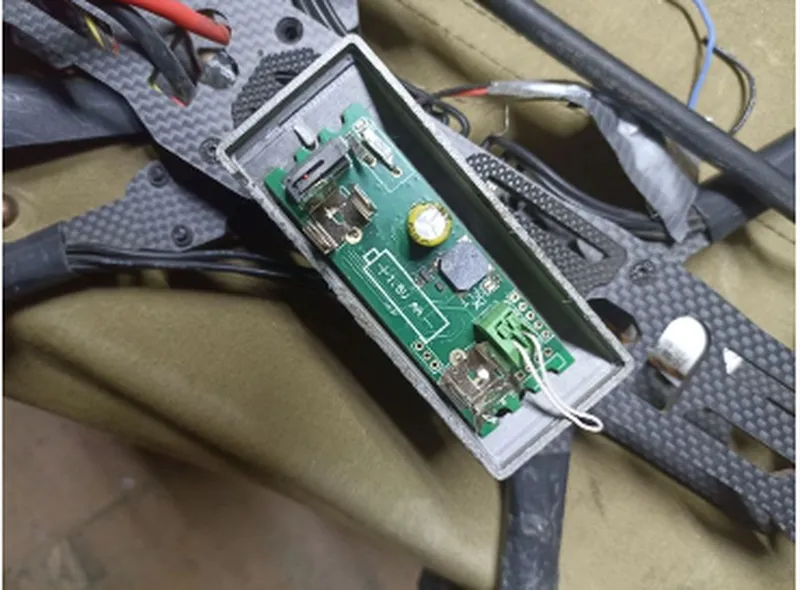
The landscape of unmanned aerial systems (UAS) communication is undergoing a pivotal transformation, with a notable shift towards higher frequency bands. Traditionally operating within the 300 MHz to 7.2 GHz range, these systems are increasingly utilizing the 7.5–12 GHz frequencies. This progression into the centimeter-wave (SHF) domain marks a significant technological advancement, particularly for small and medium-class drones.
The conventional frequency bands historically employed for UAV command and video links, specifically 2.4 GHz and 5.8 GHz, are experiencing saturation. This congestion hinders performance due to increased interference and limited bandwidth, compelling operators to seek alternatives.
Operating within the 7.5–12 GHz spectrum offers several advantages. The higher frequency bands allow for greater data throughput and reduced latency, particularly beneficial for high-definition (HD) and 4K video transmission. This shift is crucial for applications requiring real-time data processing and high-resolution imaging. Notably, during the Nagorno-Karabakh conflict, the use of advanced UAVs, like the Bayraktar, highlighted the tactical advantage of superior communication capabilities.
However, utilizing frequencies above 7 GHz introduces technical challenges. The shorter wavelengths inherent to these frequencies result in faster signal attenuation and limited ability to penetrate obstacles, necessitating a clear line of sight between the UAV and its control station. High RF precision and antenna stability become critical, as even minor detuning can significantly degrade link performance.
To maintain stable connections at these higher frequencies, UAVs must employ high-gain directional antennas and, potentially, increased transmitter power. Such configurations ensure that the signal can traverse longer distances without significant degradation, even in challenging environments.
In scenarios where line-of-sight is obstructed or terrain masking is an issue, airborne relay UAVs can be deployed. These relay systems act as intermediaries, allowing for sustained communication links by bridging the gap between the primary UAV and its control station.
The shift of UAV operations into the higher frequency 7.5–12 GHz band represents a strategic response to the saturation of traditional communication bands. While this transition offers improved data throughput and reduced latency, it also demands advancements in antenna technology and signal management. As UAV technology continues to evolve, operating within these high-frequency spectrums will be pivotal for enhancing the capabilities and efficiency of unmanned aerial systems.
Source: https://en.wikipedia.org/wiki/2020_Nagorno-Karabakh_war, https://en.wikipedia.org/wiki/Baykar_Bayraktar_TB2, https://en.wikipedia.org/wiki/Unmanned_aerial_vehicle