Russia's Drone Revolution: The Rise of Rubikon and Unmanned Systems
Russia's Rubikon is revolutionizing drone warfare with strategic innovation and state-backed support.
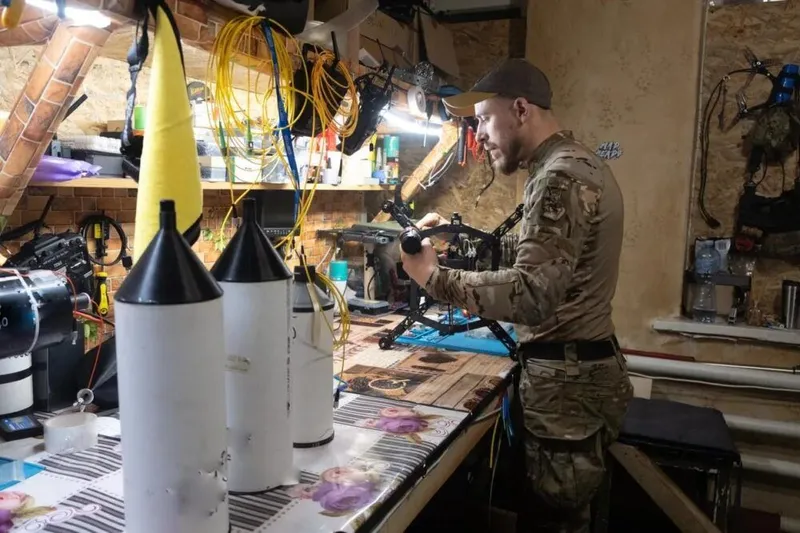
The landscape of military innovation is rapidly evolving, with Russia positioning itself at the forefront through substantial investments in drone and unmanned systems technology. This shift signifies a strategic pivot in Russia's military doctrine, particularly under the auspices of Rubikon, a new center for advanced drone technology. Established in 2024, Rubikon represents a transformative approach to drone warfare, characterized by state-backed institutional design and strategic implementation on the battlefield.
Rubikon was founded in August 2024, marking a significant departure from the ad hoc volunteer-driven drone initiatives prevalent during the early years of the conflict in Ukraine. Under the directive of Defense Minister Andrey Belousov, Rubikon rapidly emerged as a critical asset in Russia's military strategy. The organization benefits from centralized recruitment, state funding, and a professional mandate to enhance drone warfare capabilities within the Russian armed forces.
Rubikon's formation marks a deliberate structural reset within Russia's military framework. Unlike the mercenary culture or mass-mobilized formations of the past, Rubikon operates with a results-driven mindset, prioritizing innovation and adaptability under pressure. The organization's success lies in its ability to operationalize technology effectively, as evidenced by its impact on the ground in regions such as Kursk, Donbas, and Kharkiv.
Rubikon has been pivotal in advancing Russia's drone technology, particularly through the development and deployment of fiber-optic drones and unmanned ground vehicles. These systems have been refined using inexpensive Chinese components, initially achieving operational ranges of 15–20 kilometers, now reportedly extending to approximately 30 kilometers.
A significant milestone for Rubikon was the deployment of fixed-wing drones equipped with SpaceX's Starlink terminals. These drones have expanded operational reach to approximately 230 kilometers, striking targets deep behind enemy lines. This capability marks a shift from tactical disruption to deep operational impact, altering the cost structure of opposing forces by targeting logistics and high-value assets.
Rubikon's strategy involves rotating its 5,000 personnel between frontlines, maintaining mobility and tactical flexibility. This approach prevents entrenchment in single-terrain doctrines and avoids prolonged exposure to enemy adaptations. The integration of Starlink technology into drones further enhances Rubikon's ability to execute long-range operations, posing significant challenges to adversaries' supply chains.
The rise of Rubikon offers critical insights for global defense planners. The organization's success underscores the importance of implementation over conceptual superiority, highlighting the need for adaptability and direct feedback from the battlefield. As European nations consider enhancing their defense capabilities, studying Rubikon's operational model could provide valuable lessons in increasing defensive efficiency.
Rubikon's emergence as a powerhouse in Russian military innovation exemplifies a strategic shift towards sophisticated drone warfare. Through state-backed support and technological advancement, Rubikon is redefining the dynamics of modern conflict, demonstrating the transformative potential of unmanned systems in warfare. As the global defense landscape continues to evolve, understanding and adapting to these developments will be crucial for maintaining strategic parity and ensuring effective military responses.
Source: